
A diary compares observations with a chosen goal; it does not prescribe a safe cigarette count or a quitting schedule. Discuss support for quitting with a qualified professional.
A worked example
Worked example, using fictional data. A baseline week contains 70 cigarettes across seven complete days. The next week contains 54, but one day was recorded only until lunchtime. Subtracting 54 from 70 and claiming a reduction of 16 is premature. First complete or label the partial day, then compare periods with equivalent coverage. The result describes recorded consumption and circumstances only. A lower count does not prove that harm fell by the same percentage, and the diary does not establish a safe daily limit.
What to do
- 01
Check completeness of the baseline period.
- 02
Keep the chosen goal separate from actual entries.
- 03
Record actual counts even when they differ from the goal.
- 04
Compare equally complete periods and discuss difficulties with a professional.
Common mistakes
- Prescribe a sharp reduction without taking into account the dependence and condition.
- Compensate for the restriction by smoking more intensely.
- Consider a single excess as a cancellation of the entire plan.
Keep the goal separate from what happened
Write the intention in a separate note so it does not become a retrospective edit to the counts. Keep actual episodes; if the chosen goal was exceeded, add context instead of deleting a record. Before reviewing progress, check that the recording unit has not changed. Individual cigarettes, grouped episodes and partially recorded days need explanation before comparison. Choose quitting support with a qualified professional: a chart cannot select medication or determine the pace of change. The numbers can prepare a concrete conversation about difficulties, but cannot certify that a particular amount of smoking is acceptable.
How to check the result
- The goal is separate from actual consumption.
- Compared periods have equivalent coverage.
- Entries exceeding the goal remain in the history.
- A lower count is not presented as a proportional reduction in risk.
Before comparing periods, check the average daily cigarette calculation and the number of genuinely known days.
How this works in Vesometr
Vesometr displays recorded counts and estimated costs. It does not prescribe a smoking limit, assess dependence or certify that a reduction is safe.
Sources and fact checking
App features were checked against Vesometr 1.2.2. External sources explain general guidance, rather than validating individual medical conclusions.
- Vesometr 1.2.2: official APK — Identifies the release covered by this guide; fields were also checked against the release source code.
- WHO: Tobacco and nicotine — Supports the absence of a safe exposure level; a diary goal is not a medical threshold.
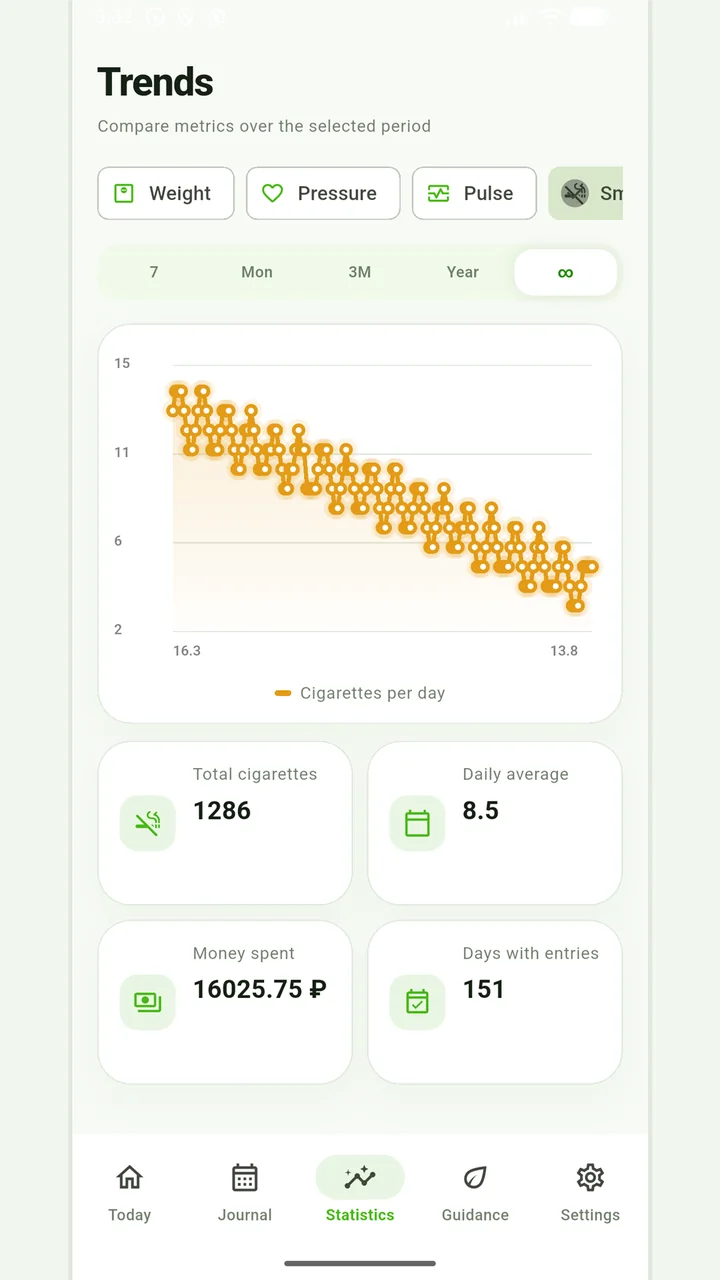
Habit journal
Quantity, historical pack price, expenses and trends across periods.
The materials do not replace medical care for nicotine addiction. If changing a habit on your own is difficult, discuss evidence-based support with a specialist.
Medical disclaimer