
State the month’s boundaries, coverage and an observation supported by source notes. Do not turn an incomplete history into a medical assessment.
A worked example
Worked example, using fictional coverage. A 30-day month contains 18 notes: 10 made in the evening and 8 in the morning after a schedule change. The person does not average the emojis or call the 12 gaps good days. Their summary says “18 known days; recording time changed mid-month; three notes to discuss”. Every part can be checked against dates. It does not establish improving or worsening health over the month or explain mood differences solely through a change in work.
What to do
- 01
Count the number of completed days.
- 02
View your mood, energy, and specific symptom separately.
- 03
Note changes in your routine and prescribed treatment.
- 04
Formulate a neutral summary and follow-up question.
Common mistakes
- Consider absences as good days.
- Mix different scales into one average.
- Postpone treatment until the end of the month if it worsens.
Make the summary shorter than the history and more precise than an impression
Start with the recorded-day count, identify changes in your recording convention and select a few source dates. Do not combine mood, tiredness, sleep and a specific symptom into one number: they have different meanings and recording methods. For a discussion, separate facts from questions rather than sharing the entire archive by default. The free-text journal is not included in the blood-pressure PDF; show relevant entries in the app or prepare a separate extract. Seek help when the situation requires it instead of postponing it until the calendar month is complete.
How to check the result
- The period boundaries and coverage are stated.
- Changes in timing or recording rules are identified.
- The summary can be traced to specific dates.
- Facts, questions and the sharing method are distinguishable.
Use the summary to select questions for a doctor about your diary that need a professional answer rather than self-diagnosis.
How this works in Vesometr
Review wellbeing by inspecting calendar dates and journal notes manually. There is no dedicated monthly mood, sleep or energy chart, and free-text journal entries are not exported to PDF.
Sources and fact checking
App features were checked against Vesometr 1.2.2. External sources explain general guidance, rather than validating individual medical conclusions.
- Vesometr 1.2.2: official APK — Identifies the release; journal behavior and PDF limits were also checked against its source code.
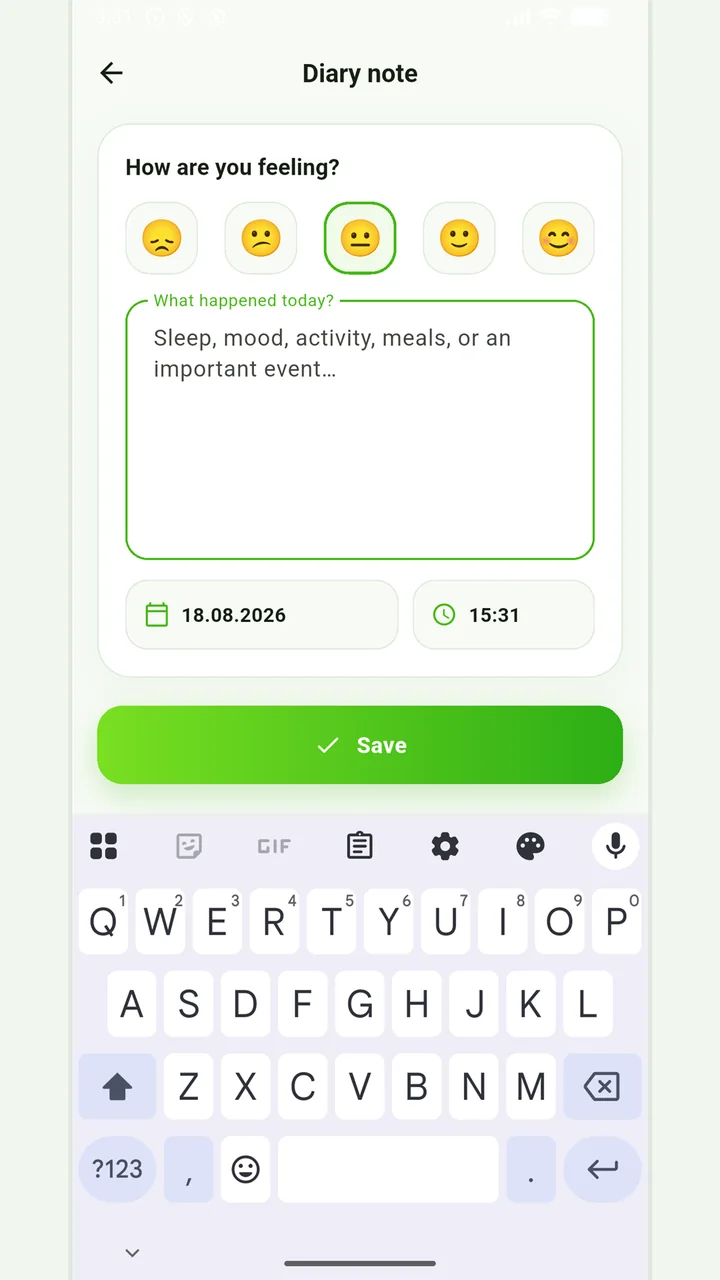
Wellbeing and notes
Mood, a personal rating and free-text context for the selected day.
The article and appendix do not determine the cause of symptoms. If your illness is severe, unusual, or worsening, seek medical attention regardless of your diary entries.
Medical disclaimer