
Separate the observed fact from your version of the cause and do not ask the application to confirm the diagnosis.
A worked example
Worked example: someone notices several different entries and initially asks, “Is this definitely caused by my medication?” They rewrite it: “I noticed a change on these dates, and my routine also changed. Which information should we check, and what should I record next?” They add questions about measurement technique and when to contact the clinician outside the planned visit. The journal provides accurate dates, but a coincidence is not treated as an explanation or a reason to change prescribed treatment independently.
What to do
- 01
Describe the fact and period in one sentence.
- 02
Name the accompanying symptoms and changes.
- 03
Ask if the frequency and method of measurement is sufficient.
- 04
Find out which signs require unscheduled treatment.
Common mistakes
- Asking a general question is everything okay without context.
- Replace the question with a ready-made diagnosis.
- Hide medication changes.
Combine a fact, an uncertainty and a next step
A useful question shows the clinician what is known and what remains unclear. Name the observation, period and conditions, then ask whether the information is sufficient and how to continue recording. For a medication discussion, prepare the name and actual schedule separately because the medicine cabinet is not included in Vesometr's PDF. Write down the answer and restate it in your own words to check understanding. Discuss who to contact again and under which circumstances. Avoid framing a question as a demand to confirm a chosen diagnosis; charts and notes do not exclude other explanations.
How to check the result
- The question includes a fact and a period.
- A suspected cause is identified as an assumption.
- A list of medicines is available separately.
- Questions about the next steps are written down.
To gather the supporting material, use preparing for an appointment.
How this works in Vesometr
The PDF helps show supported blood-pressure records. Personal questions, medicines and the free-form diary are prepared separately when needed.
Sources and fact checking
App features were checked against Vesometr 1.2.2. External sources explain general guidance, rather than validating individual medical conclusions.
- NHS: questions for a healthcare professional — Preparing questions, symptom notes and a separate list of medicines before an appointment.
- Vesometr: official release — Application version and official download channel.
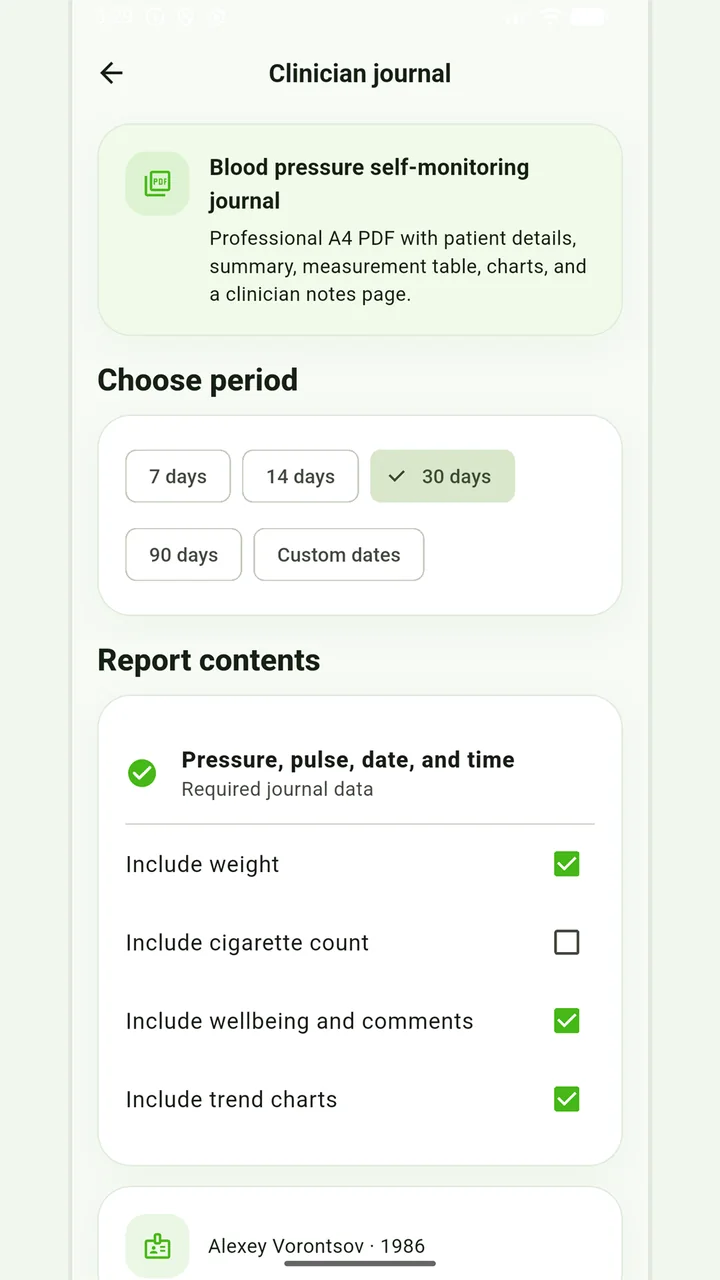
Blood-pressure PDF
A pressure and pulse journal, with optional weight and smoking information for the recorded days.
Don’t put off applying in order to accumulate the perfect report. If it is an emergency, report symptoms and follow directions from your healthcare provider; the diary can be shown later.
Medical disclaimer