
Distinguish time in bed, estimated sleep time and how you felt in the morning. Identify recalled estimates separately from an external device’s readings.
A worked example
Worked example, using fictional times. Someone goes to bed at 23:00, switches off the light at 23:40 and gets up at 07:00. They write “eight hours in bed; probably fell asleep after midnight; woke once”. All eight hours cannot be called measured sleep because some were spent awake. The result preserves understandable inputs with uncertainty, not minute-level precision. If a wearable gives a different duration, it is labelled as a separate source. Neither figure alone explains the cause of tiredness.
What to do
- 01
Write down your approximate bedtime and wake-up time.
- 02
Add a personal quality rating on one scale.
- 03
Celebrate a change in routine, illness, or trip.
- 04
Compare weeks, not just one night.
Common mistakes
- Consider wearable device data as medical research.
- Fill in the exact time by guess.
- Attribute any symptom to lack of sleep.
Keep different sources distinguishable
Write a short morning description while the night’s sequence is still remembered; estimates are acceptable. Distinguish bedtime, attempted sleep and getting up when those differences matter. You do not need to keep checking the clock at night for a perfect record. A wearable estimate and a personal impression answer different questions, so identify their sources instead of averaging them automatically. Schedule changes, travel and unusual conditions provide context but do not establish a sleep problem’s cause. Discuss persistent difficulties with a professional rather than prescribing a routine or product from the diary.
How to check the result
- Time in bed is not presented as measured sleep duration.
- Recalled estimates are identified.
- External device data have a source label.
- No cause of poor sleep is declared proven.
For the daytime part of the observation, add an energy-level description separately from the night’s assessment.
How this works in Vesometr
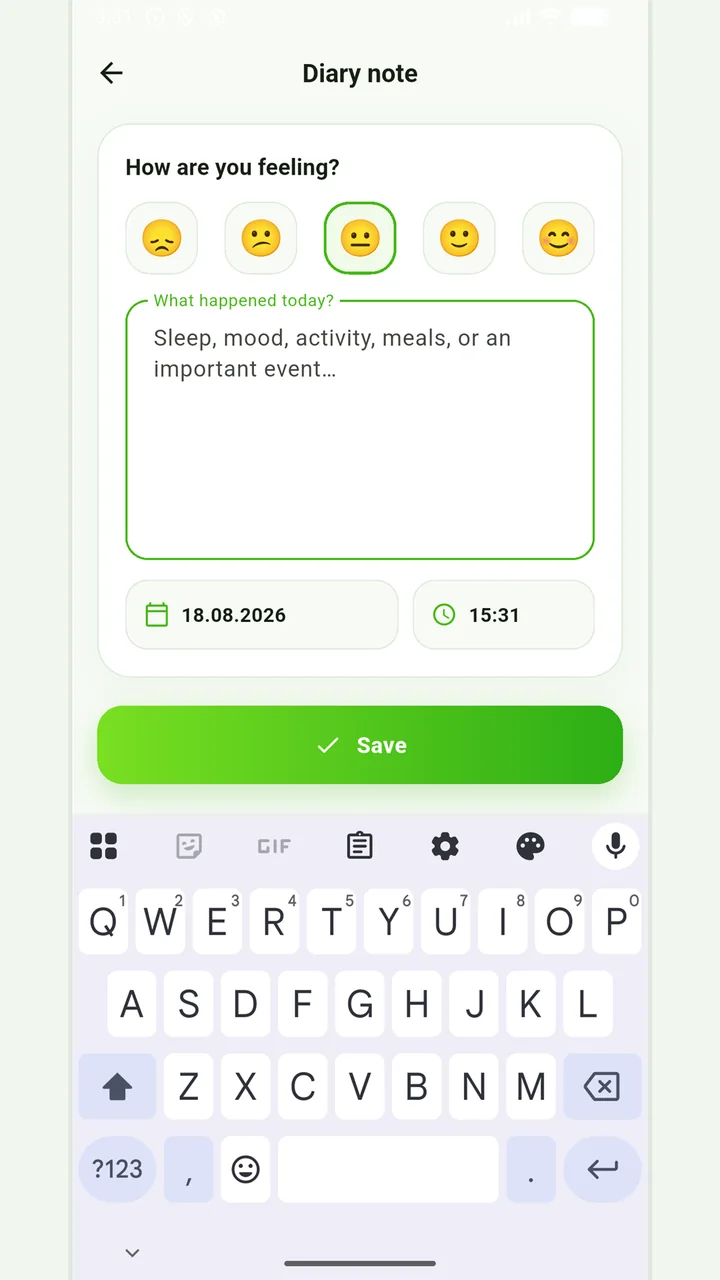
Describe sleep in free text. Vesometr has no dedicated sleep tracker, wearable import or automatic sleep-duration or quality calculation.
Sources and fact checking
App features were checked against Vesometr 1.2.2. External sources explain general guidance, rather than validating individual medical conclusions.
- Vesometr 1.2.2: official APK — Identifies the release; free-text journal fields were also checked against its source code.
- Oxford University Hospitals NHS: Sleep Diary — Distinguishes time in bed from estimated sleep and supports approximate morning recording.
Wellbeing and notes
Mood, a personal rating and free-text context for the selected day.
The article and appendix do not determine the cause of symptoms. If your illness is severe, unusual, or worsening, seek medical attention regardless of your diary entries.
Medical disclaimer