
Describe a specific ordinary activity at a comparable time. Do not use mood as an automatic measure of energy.
A worked example
Worked example, using fictional observations. At 15:00 on Monday, someone writes “completed my usual walk without stopping”. At the same time on Tuesday: “needed a rest along the way”. Tuesday also included an unusually long morning journey. These are two concrete descriptions with context, not a numerical diagnosis that energy halved. A person can feel cheerful and tired together, so an emoji cannot replace the text. Two days cannot establish the cause of a change or determine whether treatment should change.
What to do
- 01
Choose one understandable everyday reference activity.
- 02
Record at a similar time.
- 03
Note unusual exertion or known changes in circumstances.
- 04
Compare descriptions without diagnosing or judging personal worth.
Common mistakes
- Mix energy with mood without distinction.
- Reduce grades for uncompleted tasks.
- Ignore growing weakness.
Choose a comparable reference point
People use “energy” to mean different things. For later interpretation, one ordinary activity and how it felt are clearer than an unexplained score. Do not turn that reference into an endurance test; describe events from ordinary life. Check assessment time and unusual exertion. If you change the reference activity, note it, otherwise the recording method itself partly creates the difference. The app stores text without calculating an energy trend. Discuss unusual or persistent deterioration with a professional rather than waiting until a tidy series has accumulated.
How to check the result
- There is a concrete everyday reference rather than only “tired”.
- Assessment times are comparable.
- Unusual exertion is separately identified.
- Mood emojis are not used as energy measurements.
When overnight rest matters to the observation, add separate sleep notes with their own timing and data sources.
How this works in Vesometr
There is no dedicated energy slider or chart. Use free text; the five emojis refer to mood rather than physical capacity.
Sources and fact checking
App features were checked against Vesometr 1.2.2. External sources explain general guidance, rather than validating individual medical conclusions.
- Vesometr 1.2.2: official APK — Identifies the release; free-text journal fields were also checked against its source code.
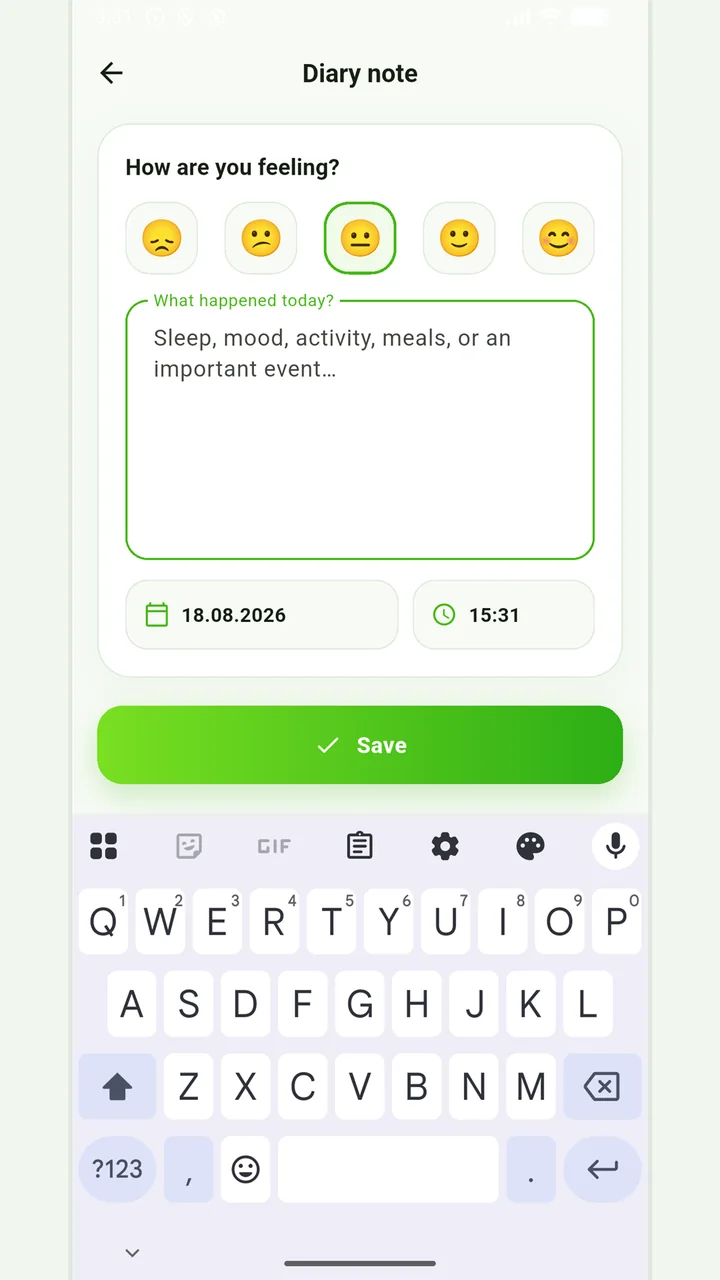
Wellbeing and notes
Mood, a personal rating and free-text context for the selected day.
The article and appendix do not determine the cause of symptoms. If your illness is severe, unusual, or worsening, seek medical attention regardless of your diary entries.
Medical disclaimer