
Separate the selected mood emoji from a specific sensation. Date and time preserve sequence; text explains what you actually noticed.
A worked example
Worked example, using a fictional note. In the evening, someone selects the neutral emoji and writes: “difficulty concentrating after lunch, approximately 14:00–15:00; cause unknown”. The entry is created at 21:00, so the event time remains in the text. A later reader can distinguish general mood from one event. A neutral emoji does not establish that the day had no complaints. One episode cannot identify a condition or an effect of lunch. For an ordinary review, this short chronology is sufficient.
What to do
- 01
Choose one of the five mood emojis.
- 02
Briefly describe one important sensation or event.
- 03
Check the actual date and time.
- 04
Reread the note to distinguish observation from a suggested cause.
Common mistakes
- Write down only bad days.
- Make a diagnosis in a note.
- Change the scale value retroactively.
Separate the day’s rating from a specific fact
The selected emoji is a personal mood marker, not a summary of every measurement and symptom. A word such as “bad” may be hard to interpret later, so say what was noticeable and when. You do not need a complete daily narrative or an explanation for every detail. If a possible explanation matters, label it as a possibility beside the original observation. When entering later, keep creation time from replacing event time. The journal supports understandable recall and discussion; it does not analyse free text, diagnose conditions or turn the note into a medical report.
How to check the result
- The emoji does not replace a symptom description.
- Event time is distinguishable from entry time.
- A possible cause is not presented as established.
- The note remains understandable without reconstructing context.
To keep emojis consistent, define your five mood markers before comparing different days.
How this works in Vesometr
The journal contains text, one of five mood emojis, and date/time. There are no separate sleep, energy, pain or diagnosis fields. These notes are not included in the BP PDF.
Sources and fact checking
App features were checked against Vesometr 1.2.2. External sources explain general guidance, rather than validating individual medical conclusions.
- Vesometr 1.2.2: official APK — Identifies the release; free-text journal fields were also checked against its source code.
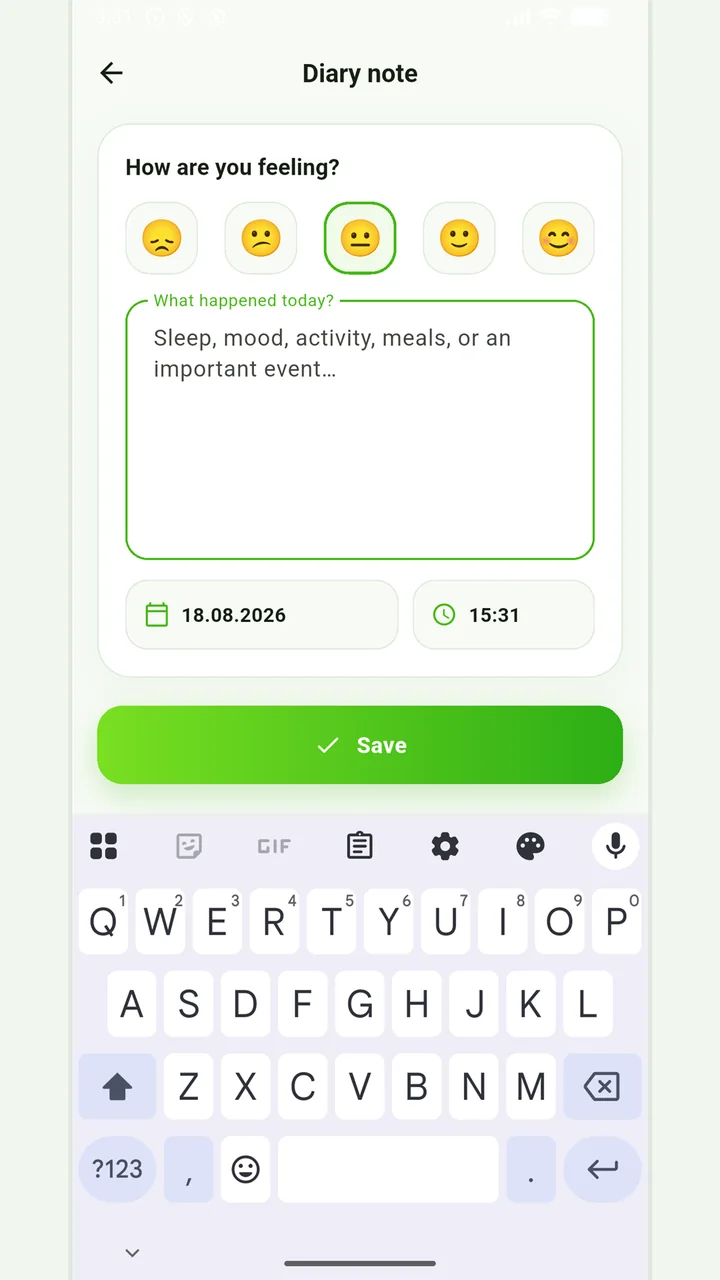
Wellbeing and notes
Mood, a personal rating and free-text context for the selected day.
The article and appendix do not determine the cause of symptoms. If your illness is severe, unusual, or worsening, seek medical attention regardless of your diary entries.
Medical disclaimer