
Use a simple note of sleep quality or duration and compare similar periods, keeping other circumstances in context.
A worked example
A fictional diary says slept less than usual next to the following morning’s weight. A similar event occurs several days later, but the weighing time also changes. Instead of concluding that short sleep caused weight gain, the writer notes both differences and keeps the issue as a question. The result is a timeline with limitations, not a controlled experiment. Ordinary-sleep days remain in the history so review is not restricted to unusual events that support the first guess.
What to do
- 01
Pick one sleep scale and apply it the same way.
- 02
Record your weight in the standard window.
- 03
Note shifts, late meals, and travel as possible confounding factors.
- 04
Look for a repeating pattern over several weeks.
Common mistakes
- Attribute any jump only to sleep.
- Measure too many parameters and quickly abandon the magazine.
- Adjust treatment based on observed agreement.
Do not select only supporting days
A sleep note is a personal description, not a measurement from a dedicated sensor. Use consistent wording and keep it separate from actual weighing time. Review the whole relevant period, including ordinary days and missing observations. When several conditions change together, a chart cannot isolate a cause. Vesometr helps you view dated entries together but does not automatically establish a causal link between sleep and weight. Do not change treatment or deliberately disrupt your routine to test an idea suggested by one note.
How to check the result
- Ordinary and unusual days are retained.
- Measurement time is distinct from the sleep description.
- A coincidence is framed as a question, not an established cause.
For clear context, see writing a short wellbeing note.
How this works in Vesometr
In the Vesometr diary, next to your weight, you can record how you feel and a short note about your sleep for later viewing.
Sources and fact checking
App features were checked against Vesometr 1.2.2. External sources explain general guidance, rather than validating individual medical conclusions.
- NHS England — How to record your weight — Repeatable weighing conditions; this source does not determine an individual target.
- Vesometr 1.2.2 — Features checked against the Vesometr 1.2.2 release source.
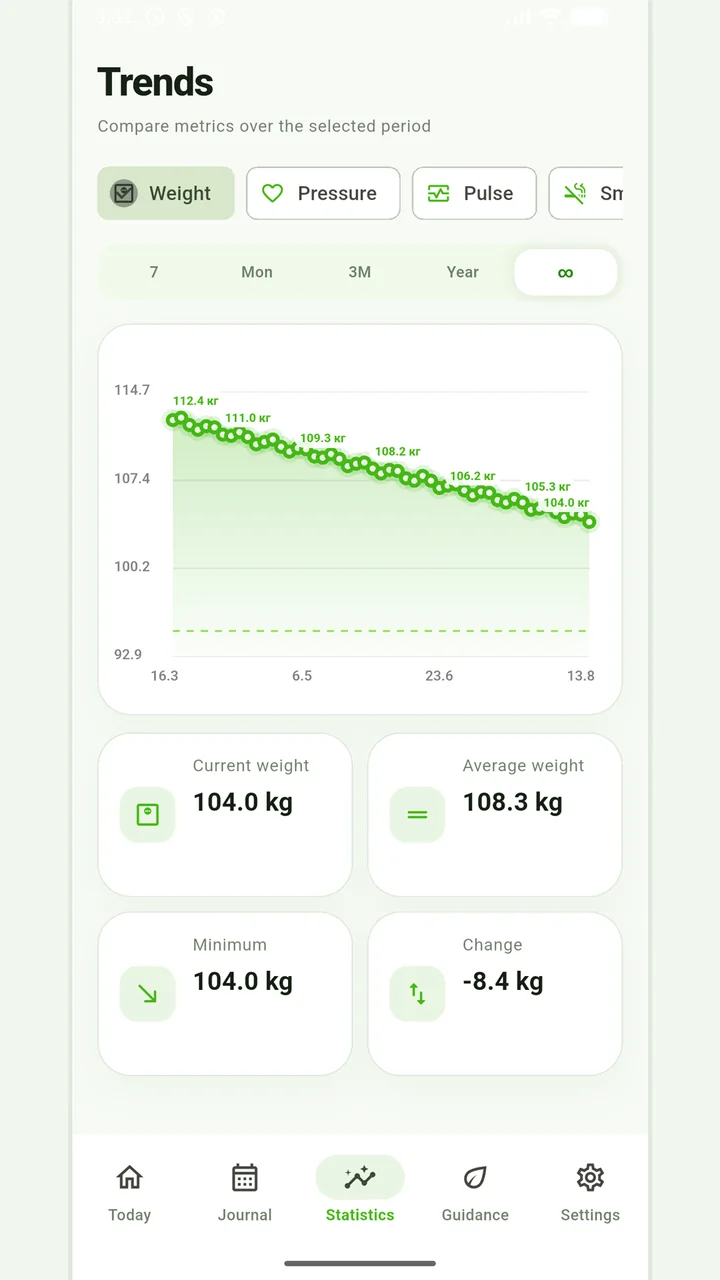
Weight trends
Charts, a target and period comparisons without judging progress by one number.
Don't use weight changes as the only way to assess your health. Unexplained rapid weight changes, severe swelling, weakness or other worrying symptoms should be discussed with your doctor.
Medical disclaimer