
Separate smoking time, symptom description and a possible association. The five mood emojis do not replace a description of a specific symptom.
A worked example
Worked example, using fictional observations. A cigarette is recorded at 09:00. A headache starts at 09:20 and is written down at 11:00. The note also mentions little sleep the previous night. The useful result is a chronology of known circumstances: sleep, smoking and headache onset. It cannot establish that the cigarette caused the pain, or that smoking is safe on a day without pain. The 11:00 timestamp describes recording time, not necessarily symptom onset. That distinction matters when presenting the history to a professional.
What to do
- 01
Save the actual smoking episode and time.
- 02
Describe the symptom separately and state its onset.
- 03
Add relevant known circumstances without choosing a cause first.
- 04
Discuss recurring observations with a professional; do not wait for a review if your condition worsens.
Common mistakes
- Attribute any symptom only to cigarettes.
- Ignore acute deterioration and continue observation.
- Independently cancel the prescribed treatment.
Sharing a date does not establish a connection
Events can sit next to each other in the calendar while occurring in a different order within the day. State symptom onset in the text, especially when writing later. Distinguish observations from explanations with phrases such as “I noticed” and “cause unknown”. Briefly record other relevant known changes, such as sleep, exertion or illness, without turning the diary into a search for one culprit. Do not use a coincidence to stop treatment or postpone care. The purpose is a clear sequence for discussion, not an unsupervised experiment involving health risks.
How to check the result
- Symptom onset is distinguished from note creation.
- The event order is clear.
- Observation is separate from suggested cause.
- An absence of symptoms is not presented as evidence of safety.
For entries written later, use recording symptom onset times to make uncertainty explicit.
How this works in Vesometr
The calendar lets you inspect entries from the same day manually. It does not analyse symptom causes or calculate smoking–mood correlations.
Sources and fact checking
App features were checked against Vesometr 1.2.2. External sources explain general guidance, rather than validating individual medical conclusions.
- Vesometr 1.2.2: official APK — Identifies the release; behavior was also checked against its source code.
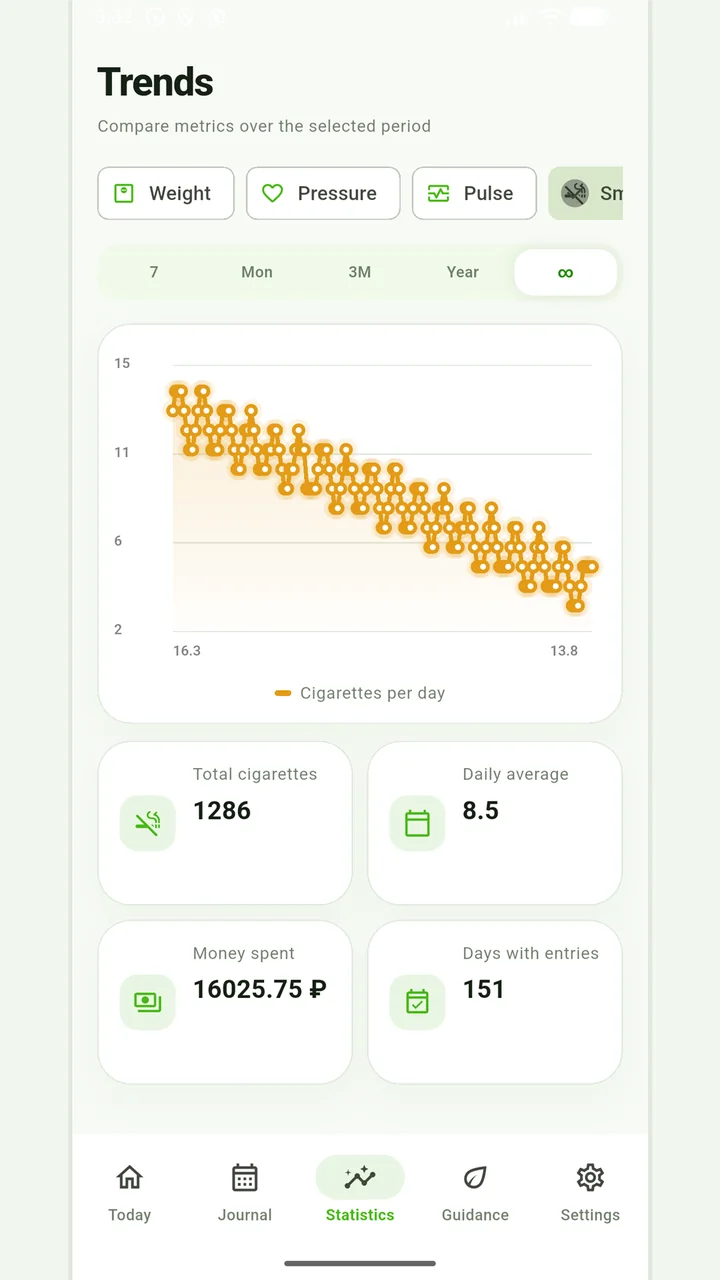
Habit journal
Quantity, historical pack price, expenses and trends across periods.
The materials do not replace medical care for nicotine addiction. If changing a habit on your own is difficult, discuss evidence-based support with a specialist.
Medical disclaimer