
To evaluate the training period, use separate, comparable control measurements, and do not mix one-time tests around the load with the main series.
A worked example
Suppose a routine reading is recorded in the morning and an additional one after exercise. Label the second point with its time and after-exercise context, including another scale if relevant. It is not proof of fat lost during that session and does not replace the morning observation. The diary retains two distinct contexts to show a professional. It does not calculate individual fluid requirements or determine whether the exercise load was safe; subtraction is not a ready-made recommendation.
What to do
- 01
Determine why you need to measure before and after training.
- 02
Record the time, duration of exercise and fluid intake.
- 03
Do not replace the morning control series with post-workout values.
- 04
Evaluate the program over a longer period and across multiple metrics.
Common mistakes
- Mistake short-term reductions for fat loss.
- Limit fluid recovery for the sake of numbers.
- Compare different types of load without context.
An additional measurement needs a purpose
Before comparing points, identify whether each was before or after activity, its time, clothing and device. Do not convert the difference into a personalised drinking target or workout-effectiveness score. When special measurements are part of a medical or sports plan, follow the relevant professional’s procedure. Keep the routine series conceptually separate even if both appear in one calendar. In Vesometr, explain circumstances in a diary note rather than implying a dedicated post-exercise body-fat field. Comparing two numbers without context is easy, but its meaning is less certain.
How to check the result
- The post-exercise reading is clearly labelled.
- It does not silently replace the routine point.
- The difference is not converted into fat loss or a drinking target.
The same comparison limits are explained in weight changes during the day.
How this works in Vesometr
If you add such a value to Vesometr, make sure to explain the terms in a diary note to avoid confusing it with a regular measurement later.
Sources and fact checking
App features were checked against Vesometr 1.2.2. External sources explain general guidance, rather than validating individual medical conclusions.
- NHS England — How to record your weight — Repeatable weighing conditions; this source does not determine an individual target.
- Vesometr 1.2.2 — Features checked against the Vesometr 1.2.2 release source.
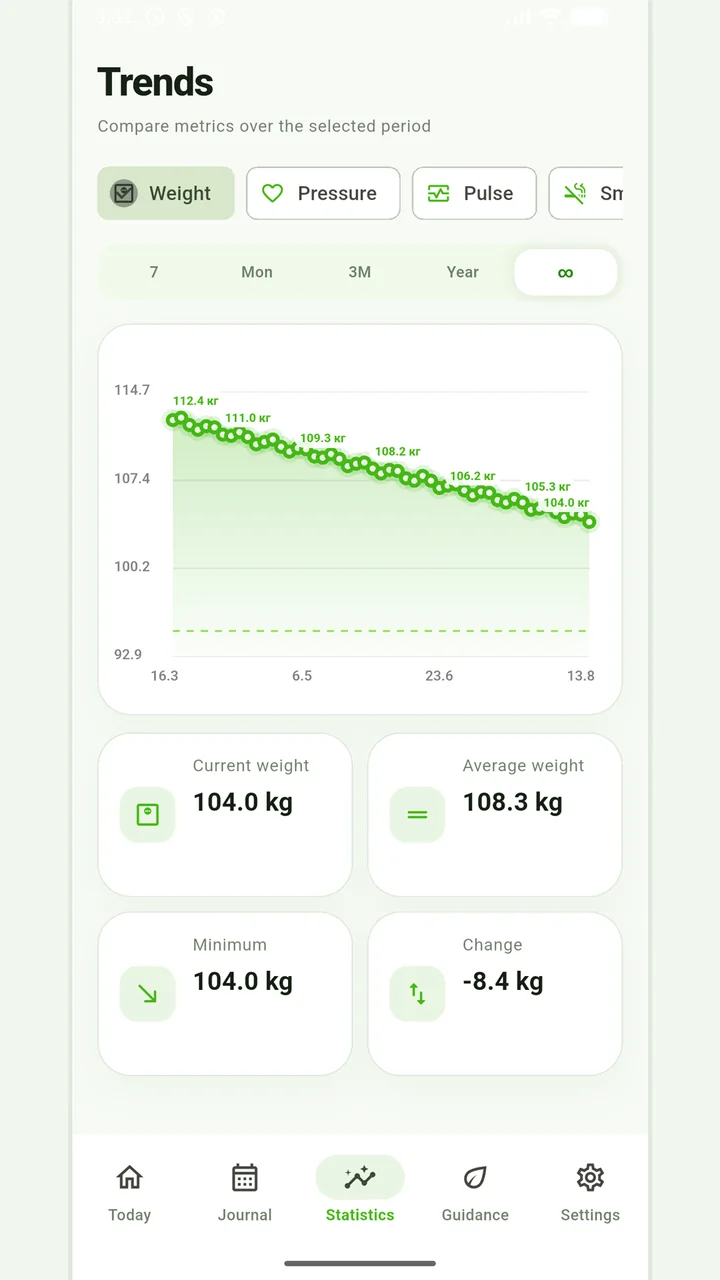
Weight trends
Charts, a target and period comparisons without judging progress by one number.
Don't use weight changes as the only way to assess your health. Unexplained rapid weight changes, severe swelling, weakness or other worrying symptoms should be discussed with your doctor.
Medical disclaimer