
If the goal is to observe long-term dynamics, select one control measurement and use additional values only for special observation.
A worked example
A teaching diary contains 70.2 kg in the morning and 71.0 kg in the evening. The difference is 0.8 kg, but that is not a measurement of body-fat change. The writer keeps both timestamps and notes that the evening reading followed an ordinary day. For a routine review, morning values are compared across dates. The second point remains a measurement under different conditions, not proof of its cause or a reason to restrict food or fluids.
What to do
- 01
Assign one day value as the main one and stick to this rule.
- 02
Note unusually salty foods, travel, exercise, or lack of sleep without immediately trying to find a reason.
- 03
Look at the sequence of days, not at the difference between adjacent hours.
- 04
If sudden changes occur repeatedly, discuss the diary with a specialist.
Common mistakes
- Attribute each fluctuation to one product without repeated observations.
- Compensate for the evening figure by sharply limiting food or water.
- Filling a chart with dozens of measurements without a clear goal.
A numerical difference is not an explanation
Subtracting two readings is straightforward; identifying what caused the difference is another task. Decide what an additional measurement is intended to answer. If it was incidental, label its conditions rather than replacing your usual observation routine. Vesometr retains multiple entries with times, so check which one you are comparing in the calendar. Keep the displayed value and avoid inventing compensatory actions for an evening reading. For medical monitoring, discuss frequency and relevant changes with your clinician; the application does not calculate those decisions.
How to check the result
- Both numbers retain their actual timestamps.
- The routine series uses reasonably comparable conditions.
- The difference is not labelled as body-fat change.
For a repeatable procedure, use the home weighing guide.
How this works in Vesometr
In Vesometr, one accurate entry at the usual time is usually more informative than a series of random checks.
Sources and fact checking
App features were checked against Vesometr 1.2.2. External sources explain general guidance, rather than validating individual medical conclusions.
- NHS England — How to record your weight — Repeatable weighing conditions; this source does not determine an individual target.
- Vesometr 1.2.2 — Features checked against the Vesometr 1.2.2 release source.
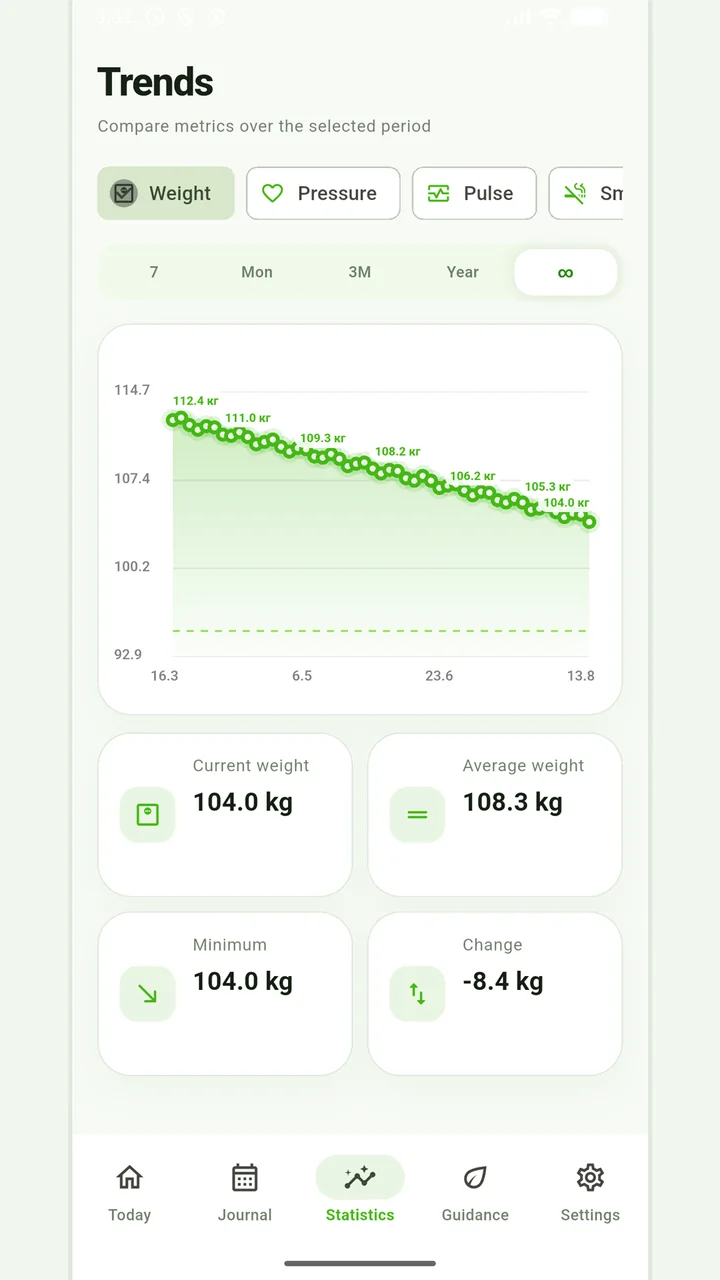
Weight trends
Charts, a target and period comparisons without judging progress by one number.
Don't use weight changes as the only way to assess your health. Unexplained rapid weight changes, severe swelling, weakness or other worrying symptoms should be discussed with your doctor.
Medical disclaimer